
Recipes
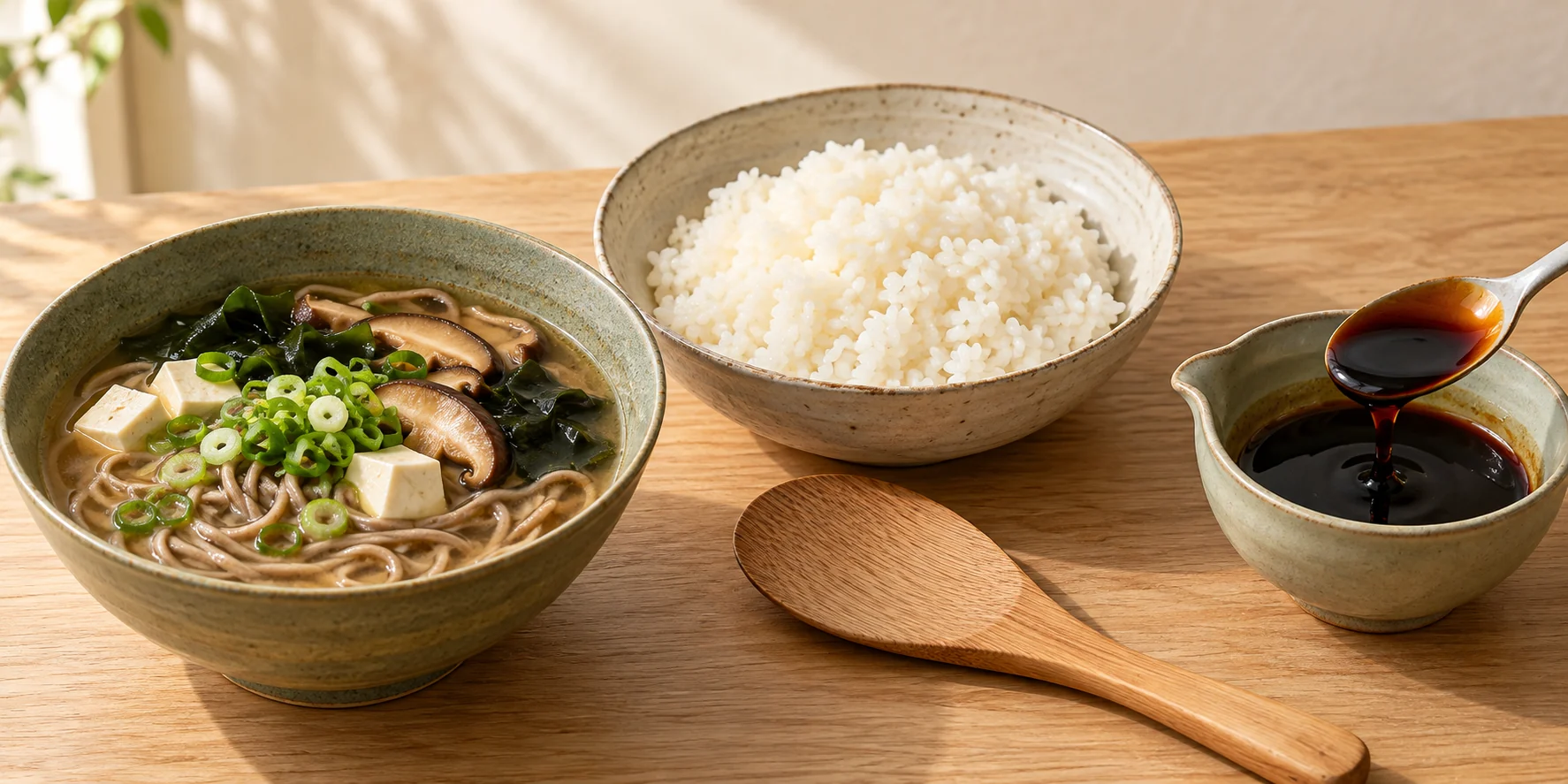
01 · Serves 2
Miso soup with noodles and tofu
A light soup combining miso, mushrooms and noodles. Use soba or rice noodles and adjust the broth to your taste.
Ingredients
- 500 ml water or dashi stock
- 30–50 g miso paste
- 100 g noodles (soba or rice noodles)
- 100 g tofu
- 50 g fresh shiitake mushrooms or other vegetables
- 1 tsp dried wakame seaweed (optional)
- 2 spring onions
- Up to 1 tsp soy sauce, only if needed
Method
- Cook the noodles according to the packet instructions and drain. Cut the tofu into cubes, slice the mushrooms and finely slice the spring onions.
- If using dried wakame, soak and drain it according to the packet instructions. Dried shiitake mushrooms also need to be soaked beforehand.
- Bring the water or stock to the boil. Add the mushrooms or vegetables and simmer for about 5–7 minutes, until cooked. Add the tofu and wakame and heat for another 1–2 minutes.
- Take the pan off the heat. In a separate bowl, mix 30 g miso with a little hot broth until smooth, then stir it back into the pan. Taste and add more miso or a little soy sauce if needed. Do not bring the soup back to the boil after adding the miso.
- Divide the noodles between bowls, pour over the hot soup and scatter with spring onions. Serve straight away.
Miso and ready-made dashi stock vary in saltiness. Start with the smaller amount of miso and taste before adding soy sauce.
02 · 300 g uncooked rice
Sushi rice
Good sushi starts with the right rice. Choose short-grain sushi rice and fold in the vinegar seasoning while the rice is still warm.
Ingredients
- 300 g sushi rice
- 420–450 ml water; use the amount on the rice packet where given
- 65–90 ml ready-made sushi rice seasoning; follow the manufacturer’s dosage instructions
To make your own vinegar seasoning
- 60 ml unseasoned rice vinegar (4–5% acidity)
- 30 g sugar
- 5 g salt
Use either ready-made sushi rice seasoning or the homemade mixture. Ready-made seasoning usually does not need extra sugar or salt.
Method
- Rinse the rice in cold water several times until the water is almost clear. Drain thoroughly.
- Put the rice in a pan and add the water. Leave to soak for about 30 minutes, unless the packet gives different instructions.
- Bring to the boil with the lid on, immediately reduce the heat to very low and cook for about 12–15 minutes. Do not stir or lift the lid unnecessarily. Always give priority to the instructions for your particular rice.
- Take the pan off the heat and leave the rice covered for another 10–15 minutes. To make the homemade seasoning, gently warm the vinegar, sugar and salt until dissolved. Do not boil.
- Transfer the warm rice to a wide bowl. Add the ready-made or homemade seasoning and gently fold it through with a wooden or plastic paddle, using a cutting motion without crushing the grains.
- Allow the rice to cool until just warm, then use it to make sushi. You can speed up cooling by fanning the rice.
Water quantity and cooking time depend on the rice and pan. The packet instructions are more specific than a general recipe. Plain rice vinegar and ready-made sushi rice seasoning are different products.
03 · 3 main ingredients
Sweet soy glaze with mirin
A sweet and savoury unagi-style glaze for rice dishes, sushi, tofu or grilled food. This is a simple homemade version; teriyaki and unagi sauces do not use exactly the same recipes.
Method
- Pour the soy sauce and mirin into a small, heavy-based saucepan. Add the sugar and heat gently over a medium heat, stirring until dissolved.
- Bring briefly to the boil, then reduce the heat. Simmer uncovered for about 10–15 minutes, stirring occasionally, until the sauce starts to thicken slightly.
- Take off the heat and leave to cool. The sauce will become noticeably thicker as it cools. Do not reduce the hot sauce to a very thick syrup.
- Drizzle over finished dishes or brush on a thin layer towards the end of cooking as a glaze.
The final flavour depends on the sugar and salt in your mirin and soy sauce. Mirin is not rice vinegar. If you like, add a little dashi powder, allowing for its salt content.
Find your ingredients at Nori
The links in these recipes take you to the relevant product categories, so you can choose the rice, noodles, miso and sauces that suit your cooking.